Showing posts with label Books. Show all posts

Wednesday, January 05, 2011

Who is I?

You may wonder sometimes who is supposed to be saying the verses. Is it the Author, that strange but uninteresting person, or is it Christopher Robin, or some other boy or girl, or Nurse, or Hoo? If I had followed Mr. Wordsworth's plan I could have explained this each time; but as it is, you will have to decide for yourselves.

Padgett Powell's critically acclaimed new book The Interrogative Mood: A Novel? is composed entirely of questions - a provocatively mysterious one being Who’s asking the questions? Seriously, that is a thought which could keep me up at night: in a work of fiction that is not written in the first person, who is the omniscient narrator?

In works of journalism and non fiction, we can often easily assume that the narrator and the author are one and the same; we can also easily accept that the thoughts in poetry belong to the poet. The water gets somewhat murky when one turns to narrative fiction, though. Is the narrator some kind of a god of the universe being described in the book? (It would not be irrelevant to note at this point that some of the earliest works of fiction written by humanity is literally considered the be the word of god.)

My friend Dylan would probably scoff - 'because fiction is an artifact, the narrator is simply the narrator', he would say, refusing to assign any greater ontological depth to it. I am not sure I agree completely, though. In fact, I would probably posit that the search for a self in the narrator lies at the heart of much of postmodern literary philosophy & techniques.

P.S. While we are on the subject, I was watching Monty Python and the Holy Grail the other day and it struck me again how this near-perfect gem can serve as a primer for those interested in the use of postmodernist techniques in popular culture.

P.P.S. In case you were wondering, Powell does have an answer to his own question - "Well let me use some of my rich French: C'est moi. Why be coy about it? That's me."

Saturday, May 02, 2009

Cover Story

Satyajit Ray designed every single cover of the Bengali literary magazine Ekshan starting with its very first issue in 1962 until his death about 30 years later, and this little montage above is a small sample of a few of those sublime covers. Among all film makers, Ray is my personal favorite, and the empathy I feel with the body of his work is difficult to quantify or describe. Ray was my own personal film school while I was growing up in a small town with no access to international cinema, and I couldn't have asked for anyone better. In this era of specialization, he was the last true auteur who kept a detailed eye on each and every aspect of his films, from scripting and pre-production to post-production and even designing most of the publicity material. As Andrew Robinson, one of his biographers, explains: "Ray has a strong claim to be the most versatile of film-makers. He was personally immersed in every aspect of production. He wrote the scripts of all his films, which were often original or near-original screenplays. He designed the effortlessly convincing sets and costumes down to the smallest details. He acted out the roles for the actors and actresses with consummate nuance. He operated the camera throughout the shooting (after 1963). He edited each frame of the film. He even composed and recorded the music after scoring it in a mixture of western and Indian notation, for all but his earliest films." However, as if that wasn't enough, he was so much more than the complete film maker; that he was an extraordinary composer and prolific author is now somewhat well known, but many of his admirers outside of Bengal still don't know that he was an amazing graphic designer, and almost single-handedly revolutionized book cover designs in the Bengali publishing industry.

His cover designs for Ekshan never fail to amaze me to this day; working with just three letters of the Bengali alphabet and usually just two colors, he managed to build a repertoire of tremendous diversity and freshness. It almost seems to me that a parallel could be drawn between the range of these covers and his oeuvre as a film maker, in the manner in which he almost effortlessly managed to scale the heights of artistic excellence repeatedly while working under unbelievable technical and financial constraints.

More Ekshan covers here.

Wednesday, April 08, 2009

The Global Politics of Shit


The Big Necessity (subtitled Adventures in the World of Human Waste, in the UK, and The Unmentionable World of Human Waste and Why It Matters, in the US) by Rose George, which has been called 'The most unforgettable book to pass through the publishing pipeline in years' by Mary Roach, is unquestionably one of the best books of recent times; very funny, very scary, and occasionally truly tragic.

If you are like most people, you are probably already disgusted; you have turned up your nose, your body and mind is on high alert, and you are secretly thinking that I have a scatological fetish. (I may or may not be a scat freak, but that is irrelevant.) In fact, Rose herself has, by now, had to spend many months answering the question of why she decided to write this book. In spite of the fact that defecation is as much a fact of life as breathing (everyone does it, after all, and an average human spends three years of their life going to the toilet), it is considered to be very lowly unlike most other body-related functions. Indeed, rules governing defecation exist in every culture at every period in history and may even be the foundation of civilization since potty training is nothing but an attempt to turn a child into an acceptable member of society. The result of this neglect is clear: 2.6 billion people in the world have no sanitation (four in ten people have no access to any latrine, toilet, bucket, or box) and poor sanitation causes one in ten of the world's illnesses with fecally contaminated water killing a child every 15 seconds.

In 2007, readers of the British medical Journal chose sanitation to be the biggest medical milestone of the last 200 years. The toilet is probably the single biggest variable in increasing human life span: proper disposal of human excreta can reduce diarrhea by nearly 40% and modern sanitation has added 20 years to the average human life. But even the reality of the rich toileted people can be a myth, and the affluent have a bigger effluent problem than they may care to admit. While most Westerners put the thought of human waste out of their minds once they flush it out of their sight, it makes sense to scratch under the surface of this complacency. Until about three years ago, Milan, Italy's cultural capital, discharged its raw sewage into the river Lambro; Brussels, the EU's administrative seat, only started building a sewage treatment plant in 2003; In the United States, 1.7 million people have no sanitation (and that does not just mean that they have no toilet in their house - even an outhouse that empties into a rickety drain counts as sanitation; it means that they have nothing).

And yet the subject remains unmentionable. Even though defecation, and the rules governing it, easily encompass the whole spectrum of human behavior, it takes a brave academic to address it and discussing it openly is probably the last true taboo. Sex and death may have both become conversational, but not shit; Steven Pinker, in his explanation of taboo words, explains how the acceptability of excreta-related words such as spit, snot, fart, piss, and shit are approximately in the same order as the acceptability of eliminating these substances from the body in public.

Sigmund Freud, who thought the study of excretion essential and its neglect a stupidity, wrote that humanity's wiser course would undoubtedly be to admit [shit's] existence and dignify it as much as possible. The Big Necessity fills a very big necessity by attempting to do just that.

Tuesday, December 12, 2006

Novel Ideas

In November 2006, in honor of National Novel Writing Month, NPR asked fiction writers to explain the essence of creating a novel, from how they write to their approach to writer's block. For me though, the most entertaining part of each interview was when the author was asked to contribute a favorite sentence. Here are some of the delightful responses.

They were in one of the 'I' states when Zeke told Isaac he had to ride in the trunk for a little while. (Laura Lippman)

Ice is the past tense of water. (Rita Mae Brown)

All parents keep secrets from their children. (Scott Turow)

The sun broke golden on the surface of the pool, a thousand floating coins. (Lewis Buzbee)

Lyle is aware that he isn't right, and sometimes he feels his jaw, his face, making sure it isn’t becoming elongated in a cruel caricature of a sad man. (Kaui Hart Hemmings)

She stood, the water up to her ankles, and turned toward the sandy beach, toward the green sea grass and colorful umbrellas and blue smoke swirling from a beach fire and a boy selling cups of lemonade with ice chips, a woman in a purple bathing suit, and turned back to the blue water and pine trees on the far side of the lake, and behind that the green hills and white clouds against blue sky, the contrast a singular beauty; and now, somewhere behind her, a man was singing a song. (Nina Schuyler)

We went to the moon to have fun, but the moon turned out to completely suck. (M. T. Anderson)

Petra loved the stories filed neatly into the flow of train windows –- she had seen arguments in profile, mouths open with laughter or horror, noses squashed against glass. (Blue Balliett)

Ross Wakeman succeeded the first time he killed himself, but not the second or the third. (Jodi Picoult)

By now she knew that this life, despite all its pain, could be lived, that one must travel through it slowly; passing from the sunset to the penetrating odor of the stalks; from the infinite calm of the plain to the singing of a bird lost in the sky; yes, going from the sky to that deep reflection of it that she felt within her own breast, as an alert and living presence. (Geraldine Brooks)

And wasn't sorrow a kind of slow death anyway? (Gail Tsukiyama)

It was late in the fall and the trees lining our driveway had turned red like a row of burning matches. (Jess Walters)

In the end, the survivor gets to tell the story. (Nancy Werlin)

To Jane's surprise, a grilled cheese sandwich with chocolate milk was exactly what she wanted right then. (Jeanne Birdsall)

In 1954, the summer before I entered third grade, my grandmother mistook Andrew Imhof for a girl. (Curtis Sittenfeld)

Leaves of Grass saved my ass. (Gayle Brandeis)

The boy had probably been praying to a distinctly conceived God not to lose courage; he must have been simultaneously aware of the rush of time transporting him to the explosive instant; the patrons were sprinting along the lines of their own thoughts and personal dramas, their love affairs, their work conflicts, their sporting enthusiasms; the youth probably found his field of vision tightly narrowing once he made it past the guard into the pizzeria; inside they must have known immediately why a youth dressed as an Orthodox Jew would be rushing past the guard; he shouted, "Allahu Akbar!" reported the wounded, failed, severely questioned guard; they didn't see him press the trigger; the boy pressed the trigger (in his pocket, beneath his black coat?); this was followed by an ultima of total clarity in which the bomber and his victims saw every detail of every aspect of their environment crystallized into that minute and second of that day in the month of August in the year 2002. (Ken Kalfus)

Fall in love whenever you can. (Alice Hoffman)

Thursday, November 30, 2006

Bulging Trousers

Few things can be funnier or more entertaining than really good bad sex writing: robustly and lecherously purple, and valiantly, if somewhat unintentionally, hilarious. The shortlist for this year's Bad Sex in Fiction award (established by the Literary Review to celebrate truly cringe-worthy erotic writing and mark "the crude, tasteless, often perfunctory use of redundant passages of sexual description in the modern novel.") was impressive, but debut author Iain Hollingshead scooped up the prize for his novel Twenty Something, beating established writers including Irvine Welsh, Will Self, David Mitchell and American literary maverick Thomas Pynchon.

"I hope to win it every year," said a delighted Hollingshead (the prize's youngest-ever winner at 25), who received his award, a statuette and a bottle of champagne, from rock singer Courtney Love at a London ceremony. His use of clichés and euphemisms, and his description of "bulging trousers", sealed the win, the judges said.

So, here, without further ado, is the incriminating passage (you will find the complete set of shortlisted extracts here):

She's wearing a short, floaty skirt that's more suited to July than February. She leans forward to peck me on the cheek, which feels weird, as she's never kissed me on the cheek before. We'd kissed properly the first time we met. And that was over three years ago.

But the peck on the cheek turns into a quick peck on the lips. She hugs me tight. I can feel her breasts against her chest. I cup my hands round her face and start to kiss her properly, She slides one of her slender legs in between mine. Oh Jack, she was moaning now, her curves pushed up against me, her crotch taut against my bulging trousers, her hands gripping fistfuls of my hair. She reaches for my belt. I groan too, in expectation. And then I'm inside her, and everything is pure white as we're lost in a commotion of grunts and squeaks, flashing unconnected images and explosions of a million little particles.

Tuesday, July 04, 2006

One of the World's Last Great Secrets

In the following passage from The Glass Palace, a rich, layered, epic novel set primarily in Burma and India cataloging the evolving history of those regions before and during the fraught years of the second world war and India's independence struggle, Amitav Ghosh lovingly describes a meal.

Ilongo left and another place was laid at the table, next to Alison's. Arjun seated himself and Alison began to pile his plate with food.

"We call this ayam limau purut - chicken with lime leaves and tamarind; and here's some prawn sambal with screwpine leaves; and these are belacan brinjals; and over there is some chinchalok with chillies - shrimps, pickled in lime juice; and this is fish steamed with ginger buds..."

"What a feast! And this is an everyday dinner?"

"My mother was always very proud of her table," Alison said. "And now it's become a habit of the house."

Arjun ate with gusto. "This food is wonderful!"

"Your aunt Uma loved it too. Do you remember, Dinu? That time?"

"Yes I do." Dinu nodded. "I think I even have pictures."

"I've never eaten anything like this," Arjun said. "What is it called?"

"It's Nyonya food," Alison said. "One of the world's last great secrets, my mother used to say."

Suddenly Saya John spoke up, catching them all by surprise."It's the flowers that make the difference."

"The flowers, Grandfather?"

Saya John looked at Arjun with eyes that were fleetingly clear. "Yes - the flowers in the food. Bunga kentan and bunga telang - ginger flowers and blue flowers. They're what give the food its taste. That's what Elsa always says."


Burmese food has always fascinated me too, and the following recipe (adapted from Under the Golden Pagoda by Aung Aung Taik) has become a recent favorite. Almost childishly simple to cook, it nevertheless results in a deeply satisfying dish bursting with subtle but complex flavors.

Nananpin Ngakhu Hin
Catfish Curry with Tomato and Cilantro

One 3-pound catfish, cut into 1-inch-thick steaks
1/2 teaspoon ground turmeric
1/2 teaspoon salt
1/4 cup vegetable oil
1 yellow onion, finely chopped
3 cloves garlic, finely minced
1 teaspoon paprika
1 cup chopped tomato
8 sprigs fresh cilantro

Rub the fish steaks with turmeric and salt. Let stand for 30 minutes.

Heat the oil in a large, 3-inch deep frying pan over medium heat. Add the onion, garlic, paprika, and tomato and saute until the onion is translucent, about 5 minutes. Add the water, cover, and simmer until liquid is reduced by three quarters, about 20 minutes.

Lay the fish steaks flat in the pan; do not overlap the steaks if possible. Spoon the pan juices over the fish. Cover, and cook until the fish is done, about 10 minutes. Turn off the heat, sprinkle with the cilantro, and let stand, covered, for about 15 minutes before serving.

Tuesday, June 27, 2006

The heart's deliberate chambers of hurt

It is Frank O'Hara's birthday today according to The Writer's Almanac, but a little research uncovers a different reality: O'HARA, Frank (27 Mar. 1926-25 July 1966), poet, was born Francis Russell O'Hara in Baltimore, Maryland, the son of Russell Joseph O'Hara and Katherine Broderick, who both came from strict Irish-Catholic families. O'Hara always believed he was born 27 June 1926, but his parents apparently lied about his birthdate to hide the fact that he was conceived before their marriage. Well, birthday or not, I still wanted to pay tribute to this "urbane, ironic, sometimes genuinely celebratory and often wildly funny" poet with one of his poems that is particularly close to my heart. O'Hara felt that poetry should be "between two persons instead of two pages" and sought to capture the immediacy of life, describing his work as "I do this I do that" poetry because his poems often read like entries in a diary. And yet, as Kenneth Rexroth noted, O'Hara's speech often manages to rise above its own colloquialism and is "moving in the way that only simple communication can be moving." This poem is from his collection Meditations in an Emergency published in 1957 and I can still recall the effect it had on me when I first read it in my freshman year of college; here was a voice that was at once urgent and wistful and I felt an immediate connection.

Poem

The eager note on my door said "Call me,
call when you get in!" so I quickly threw
a few tangerines into my overnight bag,
straightened my eyelids and shoulders, and

headed straight for the door. It was autumn
by the time I got around the corner, oh all
unwilling to be either pertinent or bemused, but
the leaves were brighter than grass on the sidewalk!

Funny, I thought, that the lights are on this late
and the hall door open; still up at this hour, a
champion jai-alai player like himself? Oh fie!
for shame! What a host, so zealous! And he was

there in the hall, flat on a sheet of blood that
ran down the stairs. I did appreciate it. There are few
hosts who so thoroughly prepare to greet a guest
only casually invited, and that several months ago.

Saturday, May 27, 2006

Prolix, Pretentious, Shapeless?

Mark Haddon has followed up his heartbreaking work of staggering genius, The Curious Incident of the Dog in the Night-time, which was named the 2003 Whitbread book of the year, with a collection of poetry, and the Guardian recently carried a scathing attack (I almost hesitate to call it a review) on it. Now while I will certainly be among the first to admit that The Talking Horse and the Sad Girl and the Village Under the Sea is at best a minor work, not much more than a hurried sketch done in a somewhat playful but pensive mood by an acclaimed master, I was nevertheless not a little surprised by the amount of vitriol in the aforementioned piece by Ranjit Bolt. I, for one, being firmly of the opinion that the possibility of genuine nonsense should surely be a cause for celebration, would like to respectfully disagree with Mr. Bolt. I definitely do not regret the time I spent perusing this slim volume, and I believe that admirers of Haddon's stark and sparse prose will, at the very least, discover in this book a voice that is rather different from the one that had so pleasantly surprised and delighted them.

Here are two poems that I have selected from the book. Tongue-in-cheek? Yes. Occasionally somewhat affected and sometimes mediocre? Perhaps. But tendentious and ghastly? I think not.

Dry Leaves

Horace
Odes 1:25

Young men stumbling home from parties

don't throw pebbles at your windows now.

You sleep till dawn and that busy door

of yours now hugs the step. No one


asks how you can sleep when they are dying

all night long for love of you. Times change.

You're old and no one gives a damn.

You'll weep at all the men who have deserted you


as gales from Thrace roar down

that empty lane on moonless nights.
The hot lust which sends mares mad

will flare around your ulcerated heart


and you'll cry out at the young men

who love the ivy and the dark green myrtle

but who throw the dry leaves

into the East wind, that bride of winter.


The Facts

In truth, the dwarf worked at a betting shop

and wore an orthopedic shoe.

The ugly sisters were neither sisters nor, indeed, women,
nor were they remotely interested in the prince.

The plain librarian looked better with her glasses on,

the bomb had not been fitted with a clock

and when the requisitioned farm-truck shot

the as-yet-uncompleted bridge it nose-dived into the ravine
and blew up
killing both the handsome sheriff
and his lovable but stupid sidekick, Bob.

Friday, April 28, 2006

The Shadowy Path

In A Strange and Sublime Address by Amit Chaudhuri, Sandeep, an only child living in a Bombay high-rise, spends a summer visiting his Uncle's house in Calcutta with his mother. On Sundays, his uncle sings aloud to himself during his leisurely preluncheon bath, the notes echoing in the enclosed space of the bathroom 'like rays of trapped light darting this way and that in a crystal'.

He usually sang old, half-remembered compositions that had been popular thirty of forty years ago in a Bengal where the radio and the windup gramophone were still new and incredible machines breaking the millennial silence of the towns and villages:

Godhulir chhaya pathe
Je gelo chini go tare.


Knocking on the bathroom door, Sandeep made a pest of himself by asking: " Chhotomama, what does godhuli mean?"

Lost in the general well-being of cleansing himself, his uncle replied patiently: "The word go means 'cow',and the word dhuli means 'dust'. In the villages, evening's the time the cowherds bring the cattle home. The herd returns, raising clouds from the road. Godhuli is that hour of cow dust. So it means 'dusk' or 'evening'."

As Chhotomama explained, his voice emerging from behind the steady sound of water, Sandeep saw it in his mind like a film being shown from a projector - the slow-moving, indolent cows, their nostrils and their shining eyes, the faint white outline of the cowherd, the sense of the expectant village (a group of scattered huts), and the dust, yes the dust, rising unwillingly from the cows' hooves and blurring everything. The mental picture was set in the greyish-red colour of twilight. It was strange how one word could contain a world within it.


Strange indeed! What is a word but a seemingly random arrangement of letters of the alphabet (which themselves are seemingly random shapes), or a seemingly random modulated sound? And yet, one single word can encompass whole Universes and more. The word godhuli does not just indicate a time of day, but conjures up a complete way of life.

Understanding words and phrases and the concepts they encapsulate brings us a long way toward understanding the people, and societies and cultures, who employ them. It's just amazing how, long after the dusk has given way to night, the dust from the cows' hooves has settled, and even the village itself has crumbled to dust, this word will remain, yielding its secrets to the deserving.

Monday, December 12, 2005

Bittersweet, Redux


So here are some more of my favorite bittersweet experiences, honoring a request in response to my previous post. Caveat: this is completely random and off the top of my head; I make no claims to be definitive.

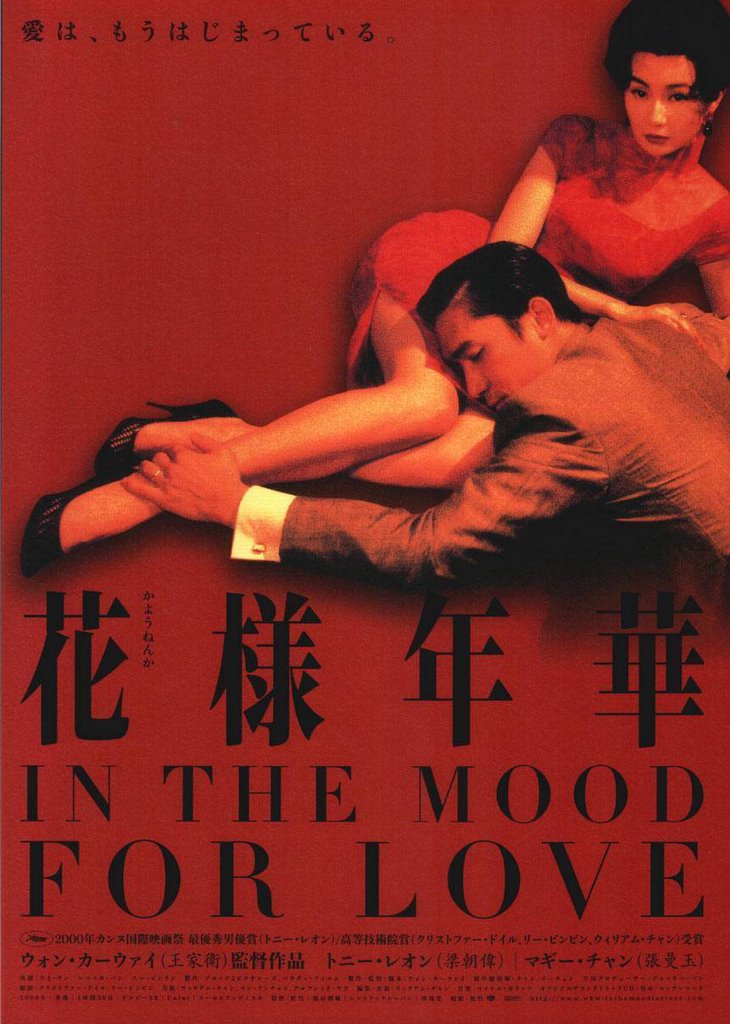
Wong Kar-wai's Fallen Angels, Happy Together, and In the Mood for Love
Walter Salles' Central do Brasil (Central Station)
Brokeback Mountain by Annie Proulx
The Lovely Bones by Alice Sebold
Stephen Sondheim's Into the Woods and Sunday in the Park with George

This is almost certainly a list in progress, and I will try to keep adding to it. Suggestions are always welcome, and will be deeply appreciated.

Sunday, December 11, 2005

Bittersweet


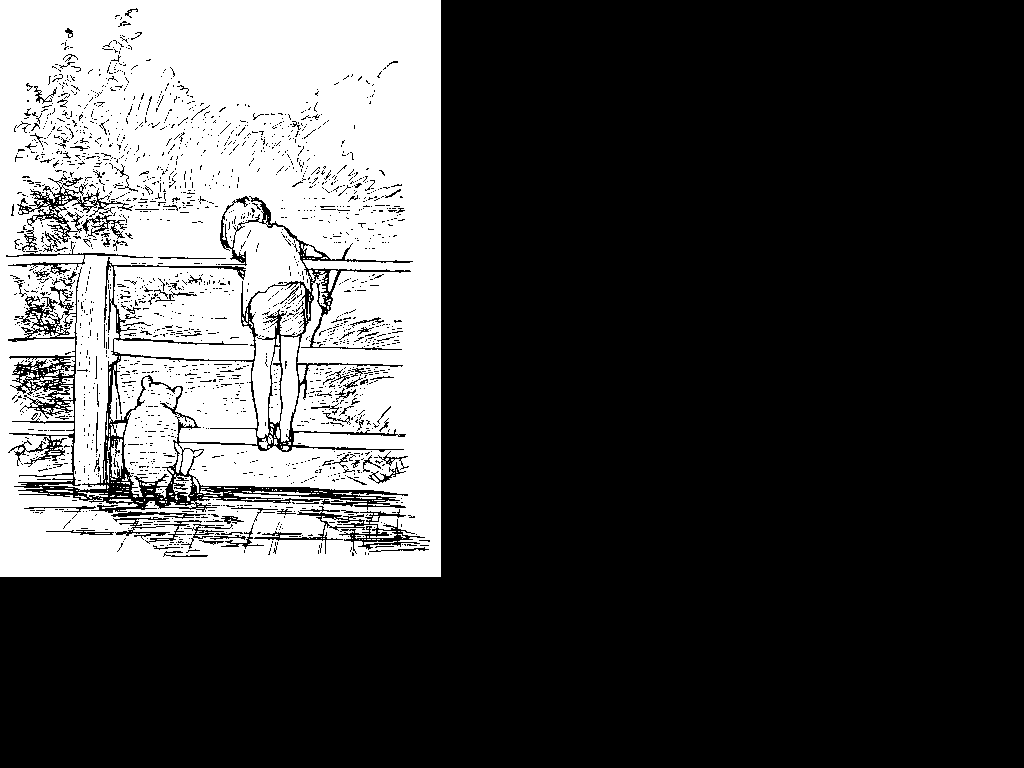
We were discussing Wong Kar Wai's movies the other day when the word bittersweet was mentioned, and I realized that this was a common theme that characterized many of my favorite works of art (and was even my favorite kind of chocolate). That everything comes to an end is both the best and worst thing about life, and the promise of the future is forever tinged with the pain of having to let go of the past. The life we make is only one of all that could have been, and that is precisely what makes it both worthwhile and heartbreaking. Like this final passage from Winnie-the-Pooh (in which Christopher Robin and Pooh come to an Enchanted Place and we leave them there), one that is particularly close to my heart.

Then, suddenly again, Christopher Robin, who was still looking at the world, with his chin in his hands, called out "Pooh!"
"Yes?" said Pooh.
"When I'm - when - Pooh!"
"Yes, Christopher Robin?"

"I'm not going to do Nothing any more."
"Never again?"
"Well, not so much. They don't let you."
Pooh waited for him to go on, but he was silent again.
"Yes, Christopher Robin?" said Pooh helpfully.
"Pooh, when I'm - you know - when I'm not doing Nothing, will you come up here sometimes?"
"Just Me?"
"Yes, Pooh."
"Will you be here too?"
"Yes, Pooh, I will be, really. I promise I will be, Pooh."
"Thats good," said Pooh.
"Pooh, promise you wont forget about me, ever. Not even when I'm a hundred."
Pooh thought for a little.
"How old shall I be then?"
"Ninety-nine."
Pooh nodded.
"I promise," he said.
Still with his eyes on the world Christopher Robin put out a hand and felt Pooh's paw.
"Pooh," said Christopher Robin earnestly, "if I - if I'm not quite -" he stopped and tried again - "Pooh, whatever happens, you will understand, won't you?"
"Understand what?"
"Oh, nothing." He laughed and jumped to his feet. "Come on!"
"Where?" said Pooh.
"Anywhere," said Christopher Robin.

So they went off together. But wherever they go, and whatever happens to them on the way, in that enchanted place on top of the Forest, a little boy and his Bear will always be playing.